آیا مشکلات کف در کاغذسازی شما را دچار سردرد کرده است؟ انتخاب ضد کف مناسب بسیار مهم است.
In the papermaking industry, the problem of foaming is truly unavoidable at every stage.
During pulping, natural substances like fatty acid soaps and resin acids trigger a surge of foam the moment they come into contact with alkaline liquor; during pulp washing, the black liquor—being a complex mixture—generates incessant foaming. The papermaking stage itself presents an even greater headache: if the gas content in the pulp exceeds 0.5%–1%, the consequences range from fluctuating white water levels and unstable pump frequencies to outright paper breaks, forcing the entire production line to halt for remediation.
The real challenge lies in the particularly harsh papermaking environment: high temperatures combined with strong alkalinity. Standard silicone defoamers lose their effectiveness quickly; as dosage is ramped up to compensate, costs skyrocket.
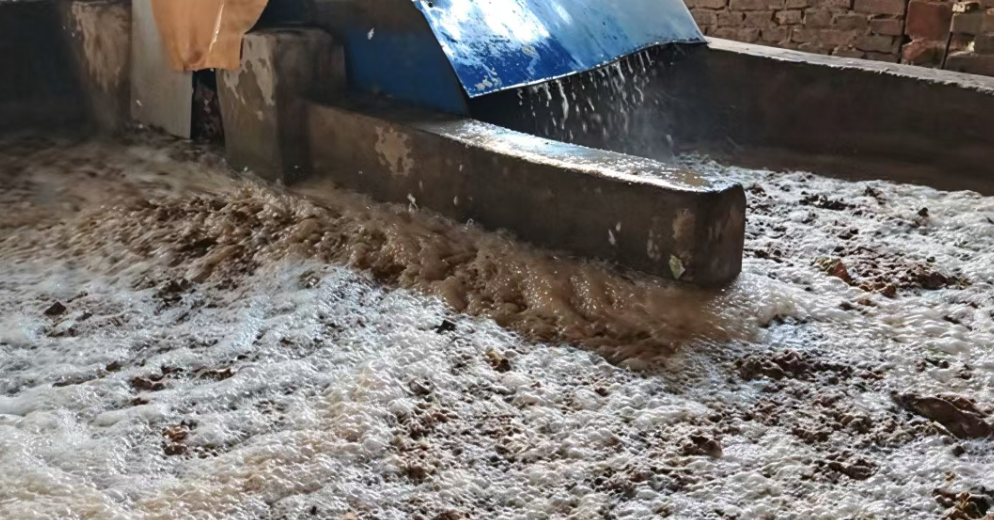
For those who use defoamers, the main concerns usually boil down to a few key questions: Can it effectively eliminate foam under conditions of high temperature and strong alkalinity? How long does the foam-suppressing effect last? Will it cause issues like oil slicking, emulsion breaking, or phase separation—ultimately leading to pinholes, spots, or dddhhhfish eyesdddhhh on the paper? And finally—is the required dosage high, and is the cost steep?
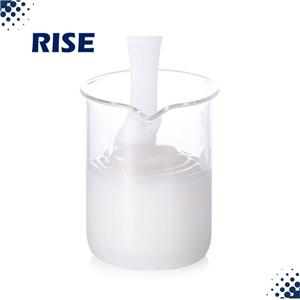
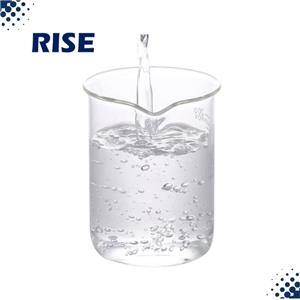
Returning to our RISE CHEMICAL papermaking defoamer: it is formulated primarily with a specialized silicone polyether, combined with additives that offer excellent emulsifying and dispersing properties. Its standout features are its resistance to high temperatures and strong alkalis, allowing it to rapidly eliminate foam and provide long-lasting foam inhibition even under such harsh conditions.
Looking at the specific stages:
In the pulp washing stage, fatty acids and resin acids in the pulp react with chemicals from the cooking liquor and black liquor to form fatty acid soaps, inevitably generating significant foam. The defoamer must be robust enough to handle this; otherwise, downstream processes—such as washing, transport, and bleaching—will be severely compromised.
Why is resistance to strong alkalis and high temperatures essential? Mainstream hydrocarbon-based defoamers on the market break foam quickly but lack foam-suppressing durability; they are ill-suited for conditions like reed pulp processing and are not environmentally friendly. Standard silicone defoamers offer better suppression than hydrocarbons but degrade too rapidly under high-temperature, highly alkaline conditions, making it impossible to keep dosage levels low. Our product combines the strengths of both: it offers superior persistence, requires only about one-quarter the dosage of standard silicone defoamers (thereby cutting costs), and causes no pollution. In practical application, it significantly reduces air content in the pulp and accelerates drainage through the pulp mat. It rapidly eliminates foam caused by lignin and surfactants, delivering outstanding results at the pulping, washing, and sizing stages.
In the papermaking stage, this defoamer is specifically engineered for the operating environment. Gas content in the pulp must be controlled once it approaches the 0.5%–1.0% range to avoid a high risk of sheet breaks. It excels at suppressing and eliminating foam in white water, rapidly removing micro-bubbles trapped between fibers while simultaneously clearing surface foam and large bubbles. This reduces pinholes and sheet breaks, prevents overflow in pulp storage tanks, and minimizes the loss of fibers and wet-end chemicals, resulting in significantly improved paper uniformity and overall quality.
If you are unsure which type of defoamer is suitable for your specific operating conditions, please feel free to CONTACT US; we can provide free samples for testing.